Impact of Venezuela's 65B Barrel Oil Deal on Markets
Explore how Venezuela's vast oil deal affects market dynamics, with implications for global crude valuation and sector trends.
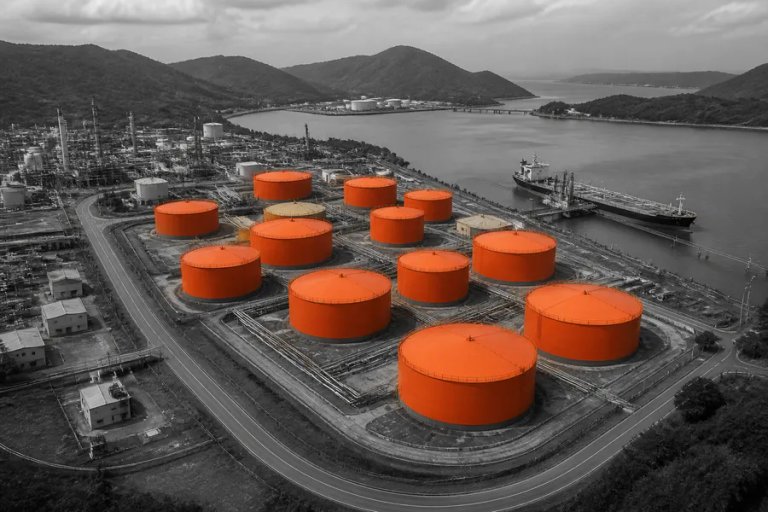
The Trump administration struck a sweeping oil-development agreement with Venezuela covering 65 billion barrels of reserves, but analysts warn the deal's complex structure and crumbling infrastructure make any near-term relief at U.S. pumps unlikely.
With national average gasoline prices running at $4.08 per gallon - up roughly 28% from $3.20 a year ago - investors in energy equities and consumer-discretionary names are watching closely to gauge whether Venezuelan supply can materially shift crude market dynamics.1
Key Takeaways
- Deal covers 17 fields; Venezuela currently pumps just 1.1 million barrels per day.
- Infrastructure decay and financing gaps could delay output gains by years.
- Hormuz blockade, not Venezuelan supply, drives today's price spike.
Market Context & Deal Structure
Venezuela holds the world's largest proven crude reserves - roughly 303 billion barrels, according to the U.S. Energy Information Administration - yet the country produced only about 1.1 million barrels per day in July, according to OPEC secondary-source estimates.1 By comparison, Saudi Arabia produces roughly nine times that volume, underscoring how far Venezuela's output has fallen from its potential.
Acting Venezuelan President Delcy Rodríguez said Friday the agreement covers 17 strategic fields with a "proven potential of 65 billion barrels of oil, more than $100 billion in investment and more than $209 billion in tax revenue for the state."1 A U.S. State Department official said the new joint entity - described as a partnership between the U.S. government and an experienced private operator - receives 100-year development rights and would become the second-largest corporate holder of proven reserves after Saudi Aramco.
Detailed Analysis: Why the Timeline Is Long
The core investment case rests not on existing stockpiles of crude but on the physical development of 17 oil fields, a distinction that analysts say is critical for understanding the deal's market impact. Venezuela's production infrastructure has deteriorated sharply: the EIA attributed a cumulative annual decline of 8.2% between 2011 and 2021 to "government mismanagement, international sanctions, and the country's economic crisis."1
As recently as January, ExxonMobil (XOM) Chairman and CEO Darren Woods called Venezuelan development "uninvestable," citing the absence of adequate legal and commercial frameworks. Woods acknowledged resources are abundant but said the real challenge lies in developing them.
Patrick De Haan, head of petroleum analysis at GasBuddy/PDI, said it bluntly: "While the hope of lower gas prices sounds promising, it still will take billions of investment to get that oil. Drilling and pumping that oil will take a very long time. Changes to fuel prices won't happen overnight or even in months."1
The deal's unusual ownership structure - granting a U.S.-linked entity majority control over another sovereign nation's resources via a 100-year contract - adds a layer of legal risk. De Haan questioned whether the arrangement could discourage rather than attract private capital, noting that potential enforcement difficulties "may slow down oil companies from wanting to invest in Venezuela."1
What Actually Moves Prices Now
The more immediate driver of elevated U.S. pump prices is Iran's blockade of the Strait of Hormuz, through which roughly one-fifth of global oil had previously flowed. Rystad Energy Chief Economist Claudio Galimberti said plainly: "To lower gasoline and diesel prices in the short term, the most effective way by far is by increasing the flows from the Middle East."1
Galimberti added that Venezuelan benefits are medium-to-long-term in nature, requiring "several quarters and, in quite a few cases, years" between initial investment and meaningful output increases. Global refining capacity constraints compound the problem, limiting how quickly any additional crude could translate into cheaper fuel at the pump.
Outlook
The U.S. would receive 55% of the new company's effective output, "split between equity ownership and guaranteed at-cost off-take," according to the State Department official, with initial production earmarked for the Strategic Petroleum Reserve and military supply needs rather than commercial markets.1 No target dates for production milestones or a financing plan have been made public.
Galimberti of Rystad framed the strategic value positively, saying the deal "will be crucial to turn around the country's aging oil infrastructure" and "unlock barrels that would otherwise have stayed underground" - but over a multi-year horizon, not months.1 For investors in energy producers, refiners, or consumer-facing sectors sensitive to fuel costs, that timeline distinction carries meaningful portfolio implications.
Conclusion
The Venezuela oil agreement represents a significant geopolitical repositioning, but its structural complexity, infrastructure deficits, and absent financing details mean it is unlikely to provide the near-term gasoline price relief the administration has signaled. Energy-market participants will need to monitor Hormuz traffic and Middle East supply routes as the more actionable short-term price catalyst.
Not investment advice. For informational purposes only.