Thailand Floods Disrupt Toyota, Thai Airways Operations
Floods in Thailand halt four Toyota plants and Thai Airways cargo, posing supply risks for Southeast Asia's auto and aviation sectors.
Severe flooding across Thailand forced Toyota (7203.T) to idle four manufacturing facilities and compelled flag carrier Thai Airways (THAI.BK) to suspend all cargo operations through October 6, raising fresh supply-chain risk flags for investors exposed to Southeast Asian auto and aviation assets.
Parts-delivery disruptions to Toyota's Thai unit and widespread staff absenteeism at Thai Airways signal potential near-term earnings pressure at both companies, even as industry bodies sought to limit alarm about broader production targets.
Key Takeaways
- Toyota Thailand idled three plants plus a joint-venture facility.
- Thai Airways cargo suspended from Sept. 30 through October 6.
- Death toll reaches up to 40; 44 of 77 provinces affected.
Market Reaction & Context
Toyota's Thai operations are a significant node in the automaker's regional supply network, and the plant shutdowns compound an already difficult year for Japanese automakers navigating tariff headwinds and demand softness in key markets. 1 Thailand's Federation of Thai Industries maintained its 2026 national vehicle production target of 1.45 million units, suggesting the industry body does not yet expect a systemic hit - but watchers note that guidance was issued before Toyota confirmed all four of its facilities were offline. 2
Thai Airways, whose largest shareholder is the Thai Finance Ministry, canceled 22 domestic and international flights scheduled for September 29-30, including services to Singapore, India, and Europe. The cargo freeze through October 6 adds logistical costs on top of reputational damage flagged by government officials.
Detailed Analysis
Bangkok was declared a disaster-affected zone after the capital received 320 mm (12.6 inches) of rain in just three days - nearly as much as the city typically records for the entire month of September - overwhelming drainage infrastructure and submerging roads, homes, and industrial access routes. 1 Flooding from parts suppliers cut deliveries to Toyota Motor Thailand, which subsequently suspended operations at three of its own plants and the Toyota Auto Works joint-venture facility, a Toyota spokesperson said. 1
Honda Motor (7267.T) separately suspended motorcycle production at one Thai plant on Monday and Tuesday, with operations expected to resume Wednesday, according to The Japan Times. 2 The disruption is spreading across Thailand's eastern industrial belt - encompassing Prachin Buri and Rayong - a corridor that hosts concentrated auto manufacturing capacity. Authorities are monitoring water levels closely, with government spokesman Ekkapob Pianpises warning that Rayong faces additional heavy rain and spillway releases.
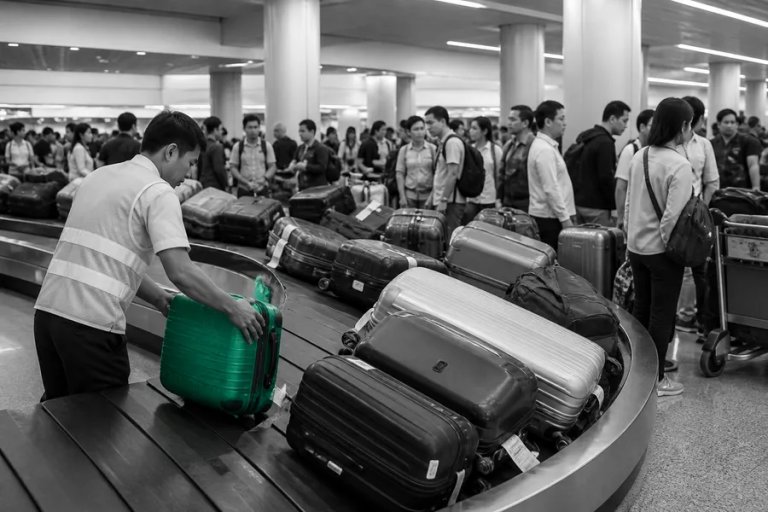
At Suvarnabhumi Airport, half of Thai Airways' ground personnel were unable to report to work on Tuesday, leaving thousands of bags unprocessed and forcing multiple flight cancellations. Bags from 52 flights operated September 26-27 were still being delivered to passengers as of Wednesday, and 34 flights faced delays on September 28 alone. 2
Thailand's interior ministry confirmed at least 24 deaths from the flooding, while government spokesman Ekkapob cited health ministry figures placing the toll at 40. Flooding remained active in 32 of the 44 affected provinces on Wednesday. 1
Outlook & Management Commentary
Thai Airways Chief Executive Chai Eamsiri apologized to passengers over the disruptions. Tourism and Sports Minister Surasak Phancharoenworakul went further, saying the airline's handling of the crisis "hurt Thailand's tourism image" and calling on the Finance Ministry to convene an urgent board meeting.
Toyota said it was "coordinating with suppliers to restore deliveries and restart operations as soon as possible," without providing a specific timeline. 1 The Thai cabinet is also weighing a 160 billion-baht ($4.8 billion), eight-year floodwater diversion project intended to protect heavily populated downstream areas - a signal that authorities view repeat flood risk as a structural rather than episodic threat to the country's industrial base. 2
Conclusion
For retail investors holding Toyota or Thai Airways shares, the key near-term question is how quickly parts logistics can be restored and whether the cargo freeze extends beyond October 6. A prolonged shutdown at any of Toyota's Thai facilities would likely affect quarterly production tallies and could ripple into global inventory levels for models assembled there. The government's emergency relief package of 2 billion baht ($59.5 million) targets flood victims broadly, offering limited direct offset for corporate losses. 2
Not investment advice. For informational purposes only.