Honda's Ohio Hybrid Move Amid Tariff Challenge
Honda allocates $2.5B to Ohio plant to strengthen U.S. production and buffer against tariff impacts.
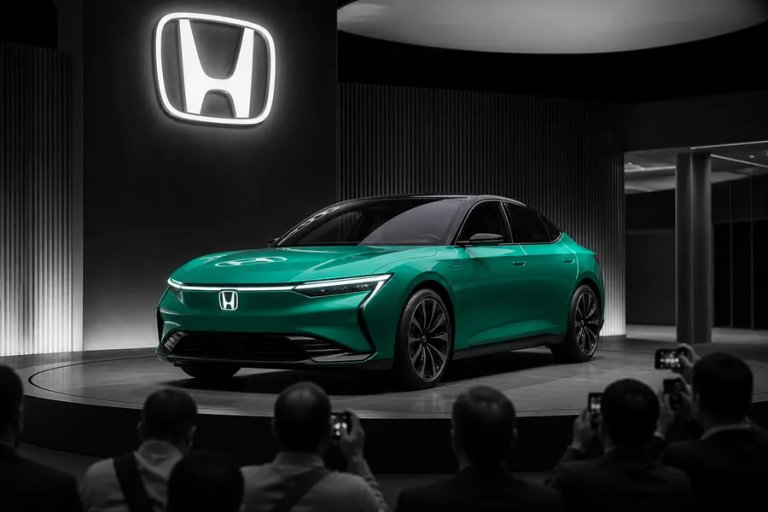
Honda Motor (7267.T) is finalising plans to sink up to $2.5 billion into a new Ohio hybrid-vehicle factory, a move that deepens its U.S. manufacturing footprint at a time when import tariffs are squeezing foreign automakers' margins.
For investors, the plant signals Honda's strategic pivot away from full electrification and toward hybrid drivetrains-a segment seeing surging consumer demand-while simultaneously hedging against trade-policy risk by producing vehicles on American soil.
Key Takeaways
- Honda to invest ¥300-400 billion (~$1.9-$2.5 billion) in Ohio hybrid plant.
- Production targeted to begin in 2030, per Nikkei report.
- Move reinforces U.S. local manufacturing as tariff shield for Honda.
Deal Terms & Valuation Context
The Nikkei business daily said on Thursday that Honda plans to commit between ¥300 billion and ¥400 billion-equivalent to roughly $1.90 billion to $2.53 billion at current exchange rates of ¥157.88 per dollar-to construct the facility 1. The plant would be Honda's latest addition to a well-established Ohio manufacturing base that already includes its Marysville and East Liberty assembly operations.
By comparison, Toyota's recent U.S. battery plant commitment in North Carolina ran to approximately $13.9 billion, while General Motors has earmarked multi-billion dollar sums for EV retooling across its Midwest facilities. Honda's hybrid-focused bet is smaller in absolute terms but more narrowly targeted at a powertrain technology with near-term commercial viability.
Detailed Analysis
Honda has been recalibrating its electrification timeline globally, acknowledging that pure-EV adoption has lagged earlier industry projections in key markets including the United States. By anchoring the new plant around hybrid technology, the company is effectively doubling down on a drivetrain that commands strong margins and does not rely on a public fast-charging infrastructure that remains uneven across the American heartland.
Ohio is a logical choice: the state has a deep automotive supply-chain ecosystem, relatively competitive labour costs, and political significance for any manufacturer seeking goodwill in Washington. Domestic production also insulates Honda from tariff exposure on Japanese-built vehicles-a risk that has grown materially over the past two years as U.S. trade policy has remained volatile.
The 2030 start-of-production timeline means the facility will not affect Honda's near-term earnings. Capital expenditure of this scale, however, will register in the company's multi-year investment budgets, and analysts will likely scrutinise how Honda funds the project alongside its parallel EV development programmes and the costs associated with its now-stalled merger discussions with Nissan.
Sector Implications
The announcement lands as U.S. senators are pressing to accelerate a ban on Chinese-built vehicles, a move that could structurally benefit established Japanese and domestic manufacturers 1. Honda's hybrid push also arrives as legacy rivals recalibrate: Ford has scaled back certain EV targets, and even some pure-play EV manufacturers are facing margin compression.
Hybrids currently sit in a regulatory sweet spot-they qualify for certain fuel-economy credits and face none of the battery-sourcing compliance complexity of fully electric vehicles under the Inflation Reduction Act's domestic-content rules. A U.S.-built Honda hybrid could be well-positioned to benefit from that environment through the end of the decade.
Outlook
Honda has not issued an official statement confirming the Nikkei report, and the automaker did not immediately respond to requests for comment. The Nikkei cited sources familiar with the matter, describing Honda as being "in the final stages of preparations" for the project 1.
"Honda is in the final stages of preparations to build a new hybrid vehicle production plant in Ohio," the Nikkei said, citing its reporting on the planned investment.
Investors should watch for a formal capital-expenditure disclosure in Honda's next earnings cycle, which could provide confirmed figures, a site location, and capacity details. Any official announcement would likely serve as a near-term catalyst for Honda's Tokyo-listed shares.
Conclusion
Honda's reported $2.5 billion Ohio hybrid plant is less a moonshot than a calculated hedge-local production to buffer tariff risk, hybrid technology to capture the market segment where demand is most durable, and a 2030 launch window that aligns with expected regulatory tightening on fuel economy. For retail investors tracking the automaker, the key variables to monitor are confirmation of the investment, the plant's eventual capacity, and how Honda balances this outlay against broader restructuring costs.
Not investment advice. For informational purposes only.