Starshield's Ukraine Service Slows Drone Defense
Starshield's limits over Ukraine affect drones, adding risks to SpaceX's valuation amid geopolitical tension before a key summit.
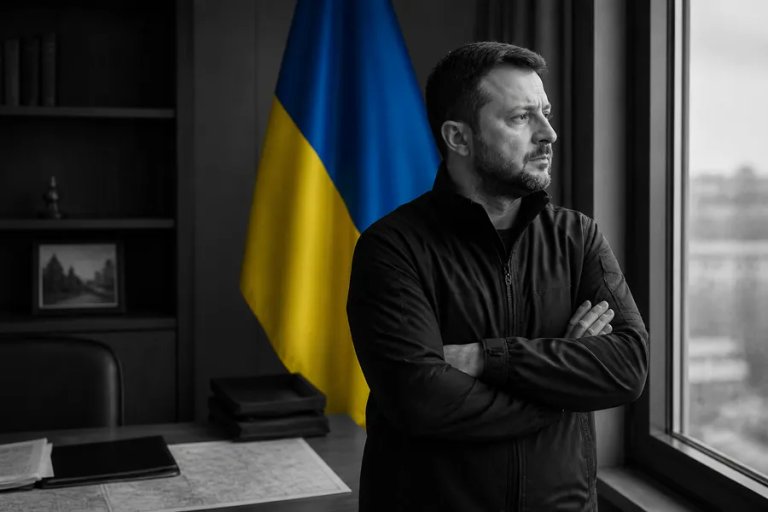
SpaceX's military satellite service Starshield remains throttled over Russian-occupied Ukrainian territory, Ukrainian President Volodymyr Zelenskyy said Tuesday, hampering Kyiv's drone interception capability at a critical diplomatic moment.
For investors tracking SpaceX's commercial and government satellite business - a segment increasingly central to the company's pre-IPO valuation narrative - the dispute introduces regulatory and reputational risk at a time when Pentagon reliance on commercial space infrastructure is under heightened scrutiny.
Key Takeaways
- Starshield speed caps cut off drones travelling over 100 mph.
- Restrictions target Russian-occupied zones, Zelenskyy says.
- Issue resurfaces days before Trump-Putin-Xi APEC meeting.
Market Reaction & Context
SpaceX remains privately held, but shares of the Procure Space ETF (SPCX) edged up 1.19% in after-hours trading on Tuesday, suggesting broader space-sector sentiment was not materially disrupted by the news. 1 Rival satellite communications operators - including publicly traded peers in the low-Earth-orbit segment - have watched the Ukraine contract closely as a bellwether for how government clients value service-level guarantees in conflict zones.
The Starshield program, distinct from consumer-grade Starlink, is operated under a contract with the U.S. government, a structure that complicates direct commercial comparisons but matters for assessing SpaceX's future government-revenue floor.
What the Restrictions Mean Operationally
Ukrainian military terminals lose Starshield connectivity when moving faster than approximately 161 kilometers per hour (100 mph), according to Kyiv. 2 That threshold directly affects interceptor drones used to shoot down Iranian-designed Shahed drones, which Ukraine has increasingly relied upon as its stockpile of conventional air-defense missiles runs low. 3
"The speed limit on Starshield in the temporarily occupied territories remains in place. We are discussing this with the American side," Zelenskyy wrote on X. 1 He added that prior strikes had succeeded against Ukrainian targets because interception systems "cannot reach sufficient speeds and are unable to intercept in time."
Detailed Analysis: A Recurring Pattern
This is at least the third time Kyiv has publicly flagged Starshield slowdowns since mid-October 2026. Restrictions were first reported around October 15, lifted on October 24, then appeared to re-engage by early November - a cycle that Ukrainian officials say leaves front-line units uncertain about connectivity. 23
The Wall Street Journal previously reported that SpaceX CEO Elon Musk had ordered the initial slowdown, citing U.S. officials familiar with the matter - an account Musk and the White House both denied. 1 Musk had said Starshield systems are "owned and controlled by the US government" and that any limits are "decided by the US military and ultimately POTUS." 1
A Ukrainian Defense Ministry official told Politico that "no such restrictions have been recorded in areas under Ukrainian control" as of mid-November, suggesting the throttling is geographically targeted to occupied zones. 2
Diplomatic Timing Adds Pressure
The renewed restrictions coincide with preparations for a trilateral meeting between U.S. President Donald Trump, Russian President Vladimir Putin and Chinese President Xi Jinping at the Asia-Pacific Economic Cooperation forum in Shenzhen on Thursday. 1 Musk is expected to accompany Trump on the China trip, adding a further layer of scrutiny to his dual role as a government-adjacent technology executive and a de-facto infrastructure provider to a U.S. ally. 1
Canadian Defense Minister David McGuinty said Wednesday he was "sure" Prime Minister Mark Carney would raise the Starshield issue directly with Trump at NATO consultations, signaling that allied governments are treating the matter as a formal policy concern rather than a bilateral U.S.-Ukraine dispute. 1
Outlook
SpaceX did not respond to a request for comment as of publication. 1 Until the company or the U.S. Defense Department provides a public explanation for the speed-cap parameters, the dispute is likely to remain a source of geopolitical noise around any future SpaceX capital-markets activity - including a long-anticipated IPO - particularly given that government contracts underpin a substantial share of projected revenue.
Investors with exposure to defense-tech or satellite communications sectors should monitor whether allied nations accelerate efforts to develop Starshield alternatives, a scenario that could affect long-term contract renewal assumptions for SpaceX's government segment.
Not investment advice. For informational purposes only.
References
- Lora Kolodny and Lim Hui Jie (2026-11-17). "Zelenskyy says Starshield speed curbs still in place over 'occupied territories' of Ukraine"
- Daria Zakharova (2026-11-13). "Starlink speed limits still in place over Russian-occupied Ukraine, Zelenskyy says"
- Guardian staff and agencies (2026-11-14). "Ukraine war briefing: Zelenskyy says Starshield restrictions continue on 'entire front line'"
- (2026-11-14). "Ukraine's Starshield Access Is Being Restricted Again, Zelensky Says"