Qantas Strike Impact on Investor Valuations
Explore how the Qantas strike affects deal terms and sector valuation for investors amidst growing labour cost pressures.
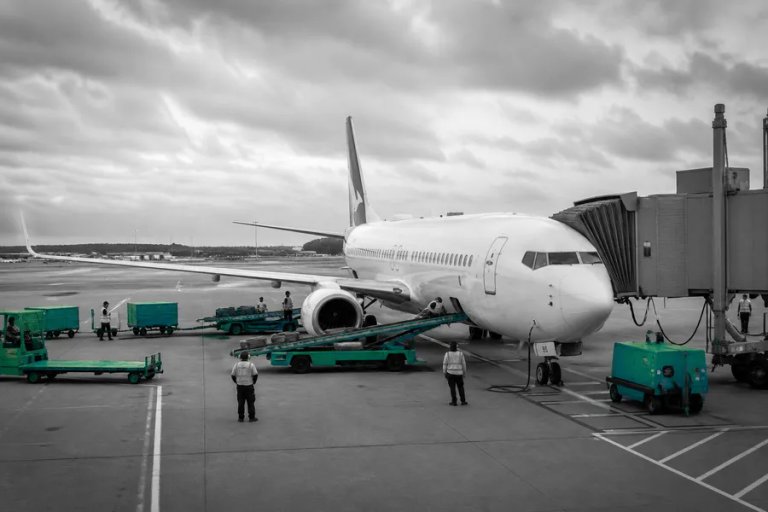
Airport workers at Qantas (QAN.AX) walked off the job Thursday across Sydney, Brisbane, Adelaide and Perth in a 24-hour strike over pay, job security and safety, adding fresh operational risk to an airline already carrying a record A$90 million court penalty.
For shareholders, the action underscores mounting labour-cost pressure at Australia's flag carrier at a moment when the airline's fragmented workforce structure - spanning at least 21 external companies and 17 subsidiaries - is drawing intensified regulatory and union scrutiny.
Key Takeaways
- 24-hour strike active at four major Australian airports Thursday.
- Workers cite real wage cuts of up to 12 percentage points since 2016.
- Qantas faces a A$90 million penalty over prior illegal outsourcing.
Market Reaction & Context
Qantas shares trade on the ASX under the ticker QAN.AX; no intraday price move was immediately available at time of publication, but the airline's stock has been sensitive to labour headlines throughout 2026 as the broader ASX 200 industrials sub-index faces headwinds from rising wage settlements across the transport sector. The freight and logistics cost implications of the Qantas labour dispute have already drawn analyst attention in recent weeks, with ground-handling disruptions historically capable of triggering rebooking costs and load-factor hits that compress operating margins. 1
The strike involves workers from Qantas Ground Services (QGS), Australian air Express freight operations and regional carrier QantasLink, broadening the potential operational footprint of the stoppage beyond passenger terminals alone. 1
Detailed Analysis
The Transport Workers Union (TWU) said affected employees are demanding pay increases in line with industry benchmarks, greater full-time employment and the consolidation of fragmented work groups under a single Qantas enterprise structure. 1 Ground workers currently earn base rates of A$26-A$30 per hour - roughly equivalent to the national minimum wage - while official cost-of-living indices have risen 31.4% over the past decade against wage growth of only 19.4%-25.6% for this cohort, according to supporting data. 2
The union's criticism of Qantas's labour architecture is pointed: the ACTU calculated in 2023 that Qantas had split its workforce across 21 external companies and 17 subsidiaries, a structure the TWU said has both weakened safety standards and depressed pay. 2 In Sydney, the industrial action is compounded by up to 400 safety screeners conducting two separate two-hour stoppages on Thursday, with a further three-hour stoppage planned for September 28. 1
The strike follows a vote by approximately 650 ground workers that returned a 97% mandate for industrial action in late August, signalling strong rank-and-file backing for the campaign. 2 The TWU has indicated that Wednesday's action in Victoria and Thursday's four-airport stoppage are sequential steps, suggesting further disruptions remain possible if negotiations stall. 2
Legal Backdrop
The current dispute is shadowed by Qantas's prior illegal outsourcing of more than 1,800 ground-handling positions during the COVID-19 pandemic - a move Australia's courts ultimately ruled unlawful after appeals through the Federal Court, Full Federal Court and High Court. 1 A court last year ordered Qantas to pay a record A$90 million ($64.03 million) civil penalty over the matter, with a separate A$120 million compensation scheme for affected workers agreed by the airline. 1 That legal history has amplified union rhetoric in the current round of bargaining and raises the political cost for management of another protracted standoff.
Management Quote & Outlook
TWU National Secretary Michael Kaine framed the action in stark terms. 1
"Strike action is always a last resort, but we are literally seeing workers maimed and killed keeping these critical services going," Kaine said.
Qantas did not immediately respond to a request for comment, leaving investors without management guidance on the operational or financial impact of the stoppages. 1 The union also called for a "fundamental reset" of the airline's labour structure after what it described as years of cost-cutting. 1
Conclusion
For QAN.AX holders, the key variables to monitor are the duration of the dispute, whether further rolling stoppages materialise beyond September 28, and whether Qantas makes a public wage offer that could quantify the earnings impact of any settlement. A prolonged impasse could weigh on passenger yields and freight volumes at a time when Australian aviation demand remains a key driver of the stock's forward earnings multiple.
Not investment advice. For informational purposes only.