Qantas Strike Risks Freight Costs for Investors
Qantas labor strike pressures freight revenues, heightening investor focus on cost management amid profit margin concerns.
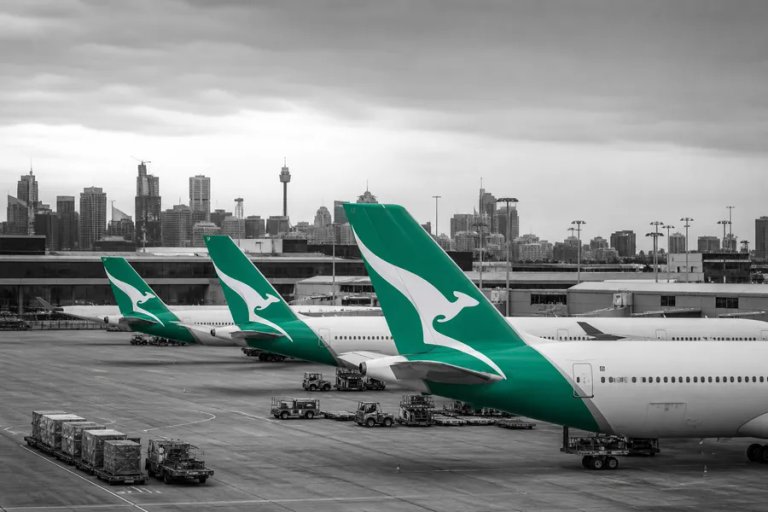
Hundreds of Qantas (QAN.AX) ground workers will walk off the job next week in a pay dispute that threatens to disrupt Australia Post freight flows and regional flight connections, adding operational cost risk to a carrier already navigating softening profit margins.
For shareholders, the strike escalates labour tensions at a subsidiary - Qantas Ground Services (QGS) - whose workforce covers both freight handling and QantasLink regional operations, meaning even a 24-hour stoppage could ripple across multiple revenue streams.1
Key Takeaways
- 24-hour strike planned Wednesday in Victoria, Thursday nationally.
- Action covers freight and QantasLink regional ground handling crews.
- Qantas says contingency plans are in place; talks ongoing at Fair Work.
Market Reaction & Context
QAN.AX has faced a turbulent 12 months, with the airline recently reporting profits at a four-year low - a backdrop that union officials have been quick to highlight in framing their wage demands. The strike action comes roughly three weeks after those results, sharpening investor attention on the carrier's cost-management track record.
Qantas is not alone in facing ground-staff pressure; industrial disputes have hit multiple Asia-Pacific carriers in 2026 as post-pandemic labour markets tighten and real wages erode. However, QAN.AX's particular exposure to a record A$90 million ($64.03 million) court fine - imposed last year for illegally outsourcing more than 1,800 ground workers during the COVID-19 pandemic - keeps its labour relations profile under heightened scrutiny.1
What the Strike Covers
The Transport Workers Union (TWU) said on Friday that workers employed by Qantas Ground Services - a subsidiary critics say pays lower rates than legacy Qantas staff - will strike for 24 hours on Wednesday in Victoria and on Thursday in the remainder of the country.1 QGS crews handle freight, including Australia Post shipments, as well as ground services for the QantasLink regional network.
A vote held in late August showed 97% of TWU members at QGS supported industrial action, the union said, signalling strong rank-and-file backing for the dispute.2 The union also said health and safety representatives in New South Wales had served Qantas with 14 provisional improvement notices over alleged safety failings at Qantas Freight, where a labour-hire worker died last year.
Union and Management Positions
TWU National Secretary Michael Kaine placed responsibility for any disruption squarely on management.
"Workers do not take this action lightly. Any disruption to freight, including Australia Post shipments, sits solely at the feet of Qantas management and its brutal disregard for customers and the workforce," Kaine said.1
Kaine had struck a similar tone when the strike ballot concluded, arguing that the airline's board had awarded itself a 17% pay rise in the same reporting period that saw profits dip, a juxtaposition the union said workers found untenable.2
Qantas Response and Contingency Planning
Qantas said it has contingency measures ready to limit customer impact and that wage negotiations are continuing through the Fair Work Commission. "We remain committed to reaching an agreement with our Qantas Ground Services employees that includes annual pay rises for our people," a Qantas spokesperson said.1
The airline's statement that "discussions through the Fair Work Commission have been constructive" suggests a settlement remains possible before the strike dates, though no deal had been reached at time of publication. Investors will be watching whether contingency operations contain any service disruptions - particularly for time-sensitive Australia Post volumes - or whether prolonged action begins to affect booking sentiment on QantasLink routes.
Earnings Implications
A single 24-hour rolling stoppage, if contained to ground services, is unlikely to move the needle materially on full-year earnings. The more substantive risk is a protracted dispute that forces Qantas to deploy costly contingency labour or triggers customer rebooking on regional routes, adding to unit-cost pressure at a moment when management has already flagged the possibility of fare increases to protect margins.
The lingering legal shadow from the pandemic-era outsourcing scandal - which yielded a record court penalty last year - means any perception that Qantas is mishandling labour relations again carries reputational as well as financial weight for the stock.1
Not investment advice. For informational purposes only.