Chip Shock Hits Asian Markets Amid Oil Supply Concern
Asian tech stocks dive on US chip slump; oil falters on supply fears. Investors face pressure from both sectors.
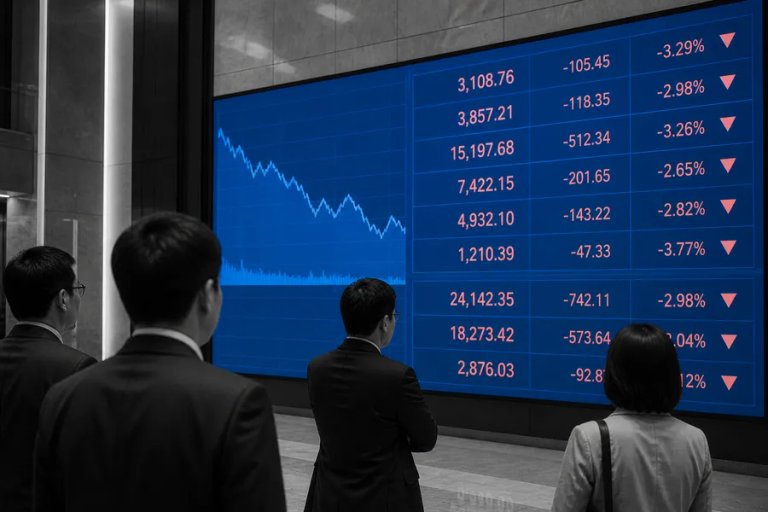
Asian equity markets declined on Monday as a Friday U.S. semiconductor selloff rippled across the region, pulling technology-heavy indexes lower while crude oil futures slipped on supply-glut concerns despite ongoing Middle East tensions.
Investors with exposure to Asian chipmakers and energy equities face a dual headwind: sector-wide valuation pressure in semiconductors and softening commodity prices that could compress energy earnings in coming quarters.
Key Takeaways
- U.S. chip selloff spread to Asian semiconductor stocks Monday.
- Crude futures weakened as supply-surplus outlook dominated sentiment.
- Middle East tensions provided little offsetting support for oil prices.
Market Reaction & Context
The spillover hit technology-weighted benchmarks across the Asia-Pacific region, with chipmakers in South Korea, Taiwan, and Japan tracking U.S. peers lower after Wall Street's Friday session closed deep in the red for the semiconductor sector 1. The move extended a broader rotation out of high-multiple tech names that had already pressured the Philadelphia Semiconductor Index in recent weeks.
Taiwan's export-oriented chip industry was among the most exposed, given its deep supply-chain linkages to U.S. fabless designers. Investors tracking TSMC's recent 60% revenue surge driven by AI chip demand will now be watching whether the latest selloff reflects profit-taking or a more sustained re-rating of sector multiples.
Detailed Analysis
Crude oil futures weakened alongside equities, as market participants judged that prospects for a global supply surplus outweighed the geopolitical risk premium embedded in prices from Middle East hostilities 1. That dynamic is consistent with OPEC+ signaling it may extend production cuts rather than deepen them, leaving traders skeptical that supply will tighten materially near term.
The simultaneous pressure on both tech equities and energy commodities created a risk-off tone across the region, with safe-haven flows modestly supporting Japanese government bonds and the yen. Regional bourses including Tokyo's Nikkei 225 and Seoul's KOSPI index logged declines as institutional sellers reduced exposure to momentum-driven positions built up earlier in the fourth quarter.
Semiconductor stocks had been among the strongest performers in Asia year-to-date, buoyed by artificial-intelligence infrastructure spending. Friday's U.S. session broke that momentum, with investors reassessing whether near-term demand signals justify current valuations after several quarters of aggressive inventory restocking across the supply chain.
Analyst Perspective
"The chip selloff reflects a recalibration rather than a fundamental reversal - investors are asking whether AI-driven demand can sustain the pace that has priced into these names over the past 12 months," said one Asia-based equity strategist, according to market commentary circulating Monday.
Energy analysts noted that the softness in crude is consistent with International Energy Agency projections pointing to surplus conditions in the first half of next year, a scenario that limits upside for oil-linked equities even if geopolitical flare-ups provide episodic spikes 1.
Outlook
The near-term trajectory for Asian chip stocks will likely depend on whether U.S. earnings guidance from major semiconductor names later this quarter reinforces or undermines the current demand narrative. Any downward revision to data-center spending forecasts from hyperscalers would amplify the regional selloff.
On the energy side, traders said the market had largely priced in a moderate conflict premium, meaning crude would need a material escalation in the Middle East to reclaim recent highs. Absent that catalyst, supply-surplus arithmetic is expected to keep futures range-bound through year-end.
Conclusion
Monday's session underscored the interconnectedness of U.S. and Asian technology markets, with sector sentiment crossing time zones faster than fundamental data can be reassessed. For retail investors, the dual pullback in chip equities and crude oil reflects a market recalibrating risk rather than pricing in a recession - but the distinction matters less if positions were sized for continued momentum in both sectors.
Not investment advice. For informational purposes only.