Japan's Trillion Dollar Defense Against Yen Bears
$1 trillion in reserves positions Japan for major yen interventions, altering forex dynamics and market valuations.
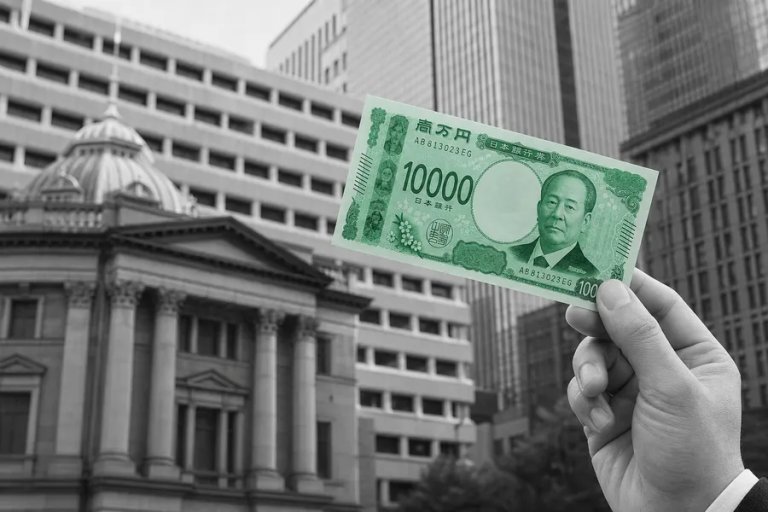
Goldman Sachs said Wednesday that Japan holds enough liquid dollar reserves for several more large-scale yen interventions, keeping USD/JPY traders on alert near the critical 160 level.
With roughly $200 billion in cash or cash equivalents readily deployable - and access to the Federal Reserve's FIMA repo facility potentially unlocking the full $1 trillion - the size of Tokyo's firepower has fundamentally shifted how options markets are pricing yen risk.1
Key Takeaways
- Goldman estimates Japan can fund two or more July-scale interventions immediately.
- Fed's FIMA facility could theoretically make the full $1 trillion liquid.
- Rate differential between U.S. and Japanese bonds remains the key trigger.
Market Reaction & Context
The yen has retraced roughly half of its post-intervention gains, slipping back toward 160 per dollar on Wednesday after briefly strengthening past its 200-day moving average of 158 following late July's joint U.S.-Japan operation.1 That reversal mirrors the pattern seen after Japan's solo interventions in April and May, when the yen returned to 40-year lows within months.
The carry trade continues to exert structural pressure on the yen, with the 10-year U.S. Treasury yielding 4.690% against Japan's 2.839% on 10-year government bonds - a spread that keeps capital flowing toward dollar assets. Goldman's Praneet Shah, head of FX options trading, said clients "really did get quite bulled up on the yen" once the FIMA facility potentially put the full reserve pool within reach.1
Sizing the Intervention Capacity
Goldman Sachs Research strategist Karen Fishman estimated Tokyo deployed as much as $85 billion in the first two days of last month's operation alone, marking Japan's largest two-day currency market foray on record outside October 2011's post-Fukushima response.1 That July action was also notable for drawing in the United States as a co-participant - the first joint U.S.-Japan yen-buying effort since 1998.
Japan's finance ministry said it plans to use the Fed's FIMA repo facility, which allows central banks to raise dollar cash by pledging Treasury holdings, avoiding the need to sell Treasuries outright on secondary markets.1 That mechanism is what theoretically raises Japan's deployable ceiling from $200 billion to the full $1 trillion.
What Could Trigger the Next Move
Goldman identified two primary catalysts that could prompt Tokyo to re-enter markets: a failure by the Bank of Japan to deliver an expected rate hike, or softer-than-anticipated U.S. economic data that reduces Federal Reserve rate expectations. Markets currently price a 65% probability of a 25-basis-point BOJ hike in September and roughly 40 basis points of total tightening by year-end.1
Fishman said that if the BOJ does not deliver in September, "that would put renewed downward pressure on the yen." Shah pointed to July 2024 as the template for effective intervention, when BOJ-MOF action coincided with a U.S. CPI miss followed by a payrolls shortfall days later.
"Any misses, I think the market will really start to increase expectations of a subsequent intervention later this week." - Praneet Shah, Head of FX Options Trading, Goldman Sachs
Wednesday's CPI release offered a partial test of that dynamic: the consumer price index rose a seasonally adjusted 0.1% in July, matching consensus, while the annual rate eased to 3.4% from 3.5% in June - in-line figures that prompted a modest dip in Treasury yields but fell short of the kind of miss that would have accelerated yen-bullish positioning.1
Outlook
Goldman's analysts were candid that intervention, however well-funded, is not a structural fix. "Not a sustainable fix ... ultimately just buys some time," Fishman said, noting the yen has depreciated roughly 45% over five years, a move driven by the persistent carry differential that only a faster-than-expected BOJ tightening cycle could meaningfully close.1
Elevated premiums on short-dated yen call options signal the market remains wary of another sudden yen surge, a dynamic Shah said is itself a deterrent to fresh yen selling. "If spot is trading up into 160, there's a real risk that you don't want to continue selling yen when you've got this large risk of a drawdown still priced by the market," he said.1
Not investment advice. For informational purposes only.