Tesla Escapes Class-Action Threat: Key Ruling Boosts Valuation
Appeals court quashes major class-action lawsuit against Tesla, easing legal risks and potentially boosting FSD valuation models for investors.
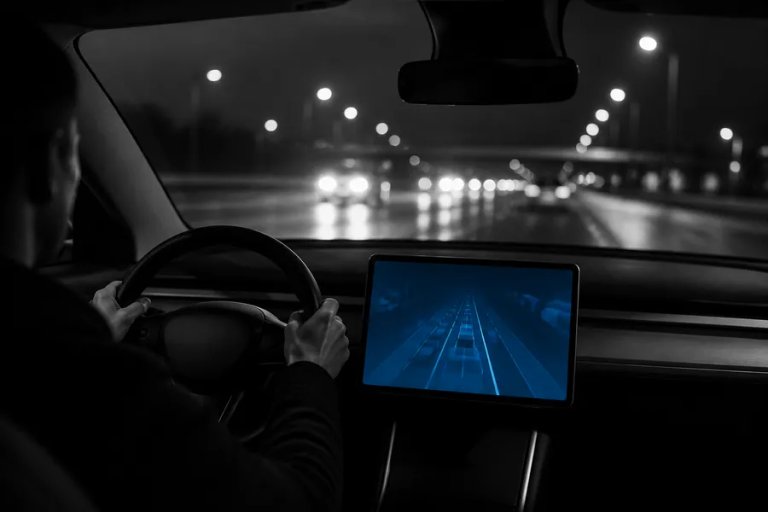
A US appeals court on Friday dismissed a lower-court order that had allowed California Tesla (TSLA.O) customers to pursue class-action claims alleging the automaker misled them about its Full Self-Driving technology's capabilities.
The ruling removes a significant legal overhang for Tesla at a moment when FSD monetisation is central to the company's long-term revenue thesis, making the decision directly relevant to any valuation model built around autonomous-driving software.
Key Takeaways
- Appeals court blocks California FSD class-action against Tesla.
- Ruling eliminates a major consolidated litigation risk for TSLA.
- FSD software revenue remains a core Tesla growth argument.
Market Reaction & Context
The decision lands as Tesla shares have been under scrutiny from investors weighing autonomous-driving ambitions against near-term delivery pressures. While the ruling does not directly affect earnings, it reduces the probability of a large, coordinated damages award that legal analysts had flagged as a tail risk for the stock.
Peer automakers pursuing driver-assistance features - including General Motors (GM.N) with its Cruise unit and Ford (F.N) with BlueCruise - also face ongoing regulatory and litigation exposure, meaning Tesla's legal win could set a procedural precedent across the sector. Tesla's earlier struggles with FSD branding in overseas markets have drawn similar scrutiny, as outlined in prior Tesla FSD regulatory challenges in Europe.
Detailed Analysis
The class-action suit centred on claims that Tesla's marketing of its Full Self-Driving package overstated the system's actual capabilities, allegedly inducing customers to pay a premium - at one point priced as high as $15,000 - for technology that does not yet deliver fully autonomous operation. 1
A lower court had certified the group of California buyers as a class, a critical procedural milestone that typically increases settlement pressure on defendants. The appeals court's reversal means plaintiffs must now pursue claims individually, a far more costly and logistically difficult path that significantly weakens their collective leverage.
From an investor standpoint, class-action certification is often the inflection point at which litigation risk is priced into a stock. Decertification - or in this case, a blocked certification - generally reduces that discount. Tesla has consistently maintained that FSD is a driver-assistance system requiring human supervision, a position the appeals court's ruling implicitly supports by finding that common questions of law or fact did not predominate across the proposed class. 1
The case also has broader implications for how automakers communicate feature roadmaps to consumers. With autonomous-vehicle regulation still evolving at both the state and federal level, marketing language around self-driving capabilities remains a live compliance issue industrywide. Alphabet's (GOOGL.O) Waymo unit and other AV players face analogous scrutiny over capability representations, a dynamic explored in recent Alphabet court proceedings in Europe.
Outlook & Attribution
Tesla did not issue a public comment in the immediate aftermath of Friday's ruling, per available reporting. The plaintiffs' legal team had not disclosed plans to appeal to the Supreme Court or seek alternative relief as of publication. 1
Legal observers note that while the ruling is a clear procedural win for Tesla, it does not resolve the underlying regulatory questions around FSD's capabilities - questions that remain active at the National Highway Traffic Safety Administration. Any future NHTSA enforcement action would represent a separate and distinct liability pathway unaffected by Friday's appellate decision.
Conclusion
Friday's ruling removes one of the more quantifiable legal risks sitting above Tesla's valuation, particularly for investors who had modelled potential class damages into downside scenarios. The decision reinforces the difficulty plaintiffs face in aggregating diverse consumer fraud claims into a single class, a structural challenge that may discourage similar suits against other automakers making bold technology promises.
For retail investors, the key takeaway is narrower: the FSD litigation risk premium in TSLA has diminished, though regulatory and safety scrutiny of autonomous-driving claims remains an industry-wide constant.
Not investment advice. For informational purposes only.