China's EV Reshapes; Geely Overtakes BYD
Geely dethrones BYD in China's EV sales. Explore market shifts and valuation impacts.
Electric vehicles captured 65.1% of China's new passenger-car sales in July 2026, reshaping the competitive rankings as Geely surged to first and BYD slipped to fifth place, industry data showed.
For investors holding positions in BYD, Tesla (TSLA), or legacy European automakers, the data signal a rapid redistribution of market share in the world's largest auto market - with direct implications for revenue forecasts and valuation multiples.
Key Takeaways
- Geely's budget EV topped China sales at ~197,500 units in six months
- Tesla Model Y ranked second; BYD's best model landed only fifth
- NEV penetration hit 65.1% in July, up sharply from 54% a year ago
Market Reaction & Context
New energy vehicles - a category that includes both battery-electric and hybrid-powered cars - accounted for 65.1% of new passenger-car sales in China in July, up from 54% a year earlier, according to China Passenger Car Association data released Tuesday 1. That 11-percentage-point swing in a single year underscores how quickly gasoline-engine incumbents are being displaced.
Despite the structural tailwind for EVs, the overall market remains under pressure. Passenger car sales fell 20.3% year-to-date through July, and even the new-energy segment saw volumes decline 12.5% over the same period, suggesting demand weakness is cutting across all powertrains 1.
Detailed Analysis
Geely (175-HK) claimed the bestselling model slot with its Xingyuan electric hatchback, moving nearly 197,500 units in the six months from February through July - priced at just under 100,000 yuan ($14,820) 1. The Hangzhou-based automaker, which ranked second in China by total sales volume in 2025, continues to straddle both combustion and electric segments through brands including premium EV label Zeekr.
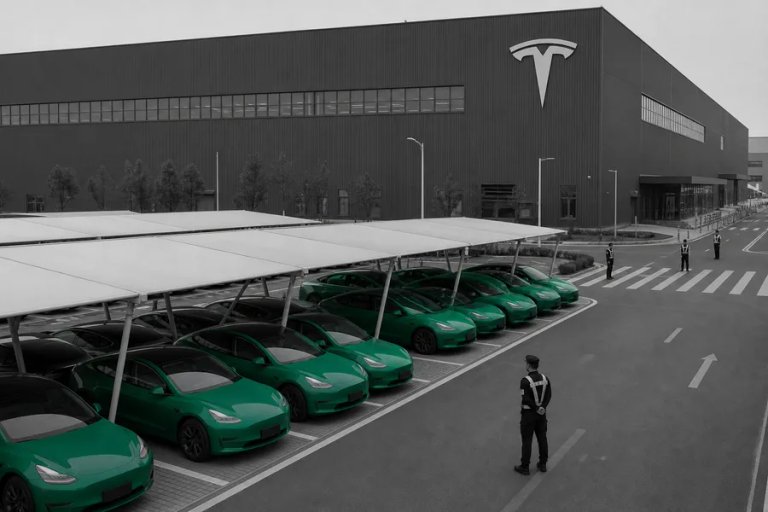
Tesla's Model Y ranked second with more than 180,000 units sold, a notable performance given its 263,500-313,500 yuan price band - roughly two to three times Geely's entry point 1. The American EV maker outsold domestic rivals Li Auto (LI) and Xiaomi (1810-HK) despite intensifying local competition.
BYD, widely regarded as China's EV champion, placed three models in the top 10 but failed to crack the top four. Its highest-ranking vehicle - the Yuan UP SUV - landed in fifth place with just under 97,700 units sold 1. The company's off-road sub-brand Ti 7 took sixth and its Sealion 06 SUV came seventh. BYD separately reported that first-half passenger car sales dropped more than 10% year-over-year.
Volkswagen was the only traditional foreign automaker to appear in the top 10, with its gasoline-powered Lavida compact slotting into ninth place - a sign that legacy combustion-engine players retain residual loyalty among some Chinese buyers, but face an increasingly narrow competitive corridor 1.
Outlook & Analyst Perspective
The data paint a market where scale and price positioning matter enormously. Geely's sub-$15,000 Xingyuan demonstrates that affordability, not brand heritage, is the primary purchasing driver for mainstream Chinese consumers. Tesla's resilience at a premium price point suggests brand differentiation and technology perception still command a meaningful premium.
"Geely has emerged as a close rival to BYD," CNBC reported, noting the company's dual-powertrain strategy as a key competitive advantage in a transitional market 1.
For investors, the divergence between BYD's market dominance narrative and its actual model-level rankings is a valuation consideration worth monitoring, particularly as the overall passenger-car market contracts.
Conclusion
China's auto market is evolving faster than many consensus forecasts anticipated - EVs now own nearly two-thirds of new car sales while the broader market shrinks. Geely's rise, Tesla's staying power at premium price points, and BYD's relative slippage collectively reframe which tickers merit attention in the world's most closely watched auto market. Investors should weigh model-level share data alongside top-line volume figures before drawing conclusions about competitive moats.
Not investment advice. For informational purposes only.