Samsung's Profit Leap Masks Chip Margin Woes
Discover how Samsung's huge profit rise contrasts with its chip margins and sector implications for future growth.
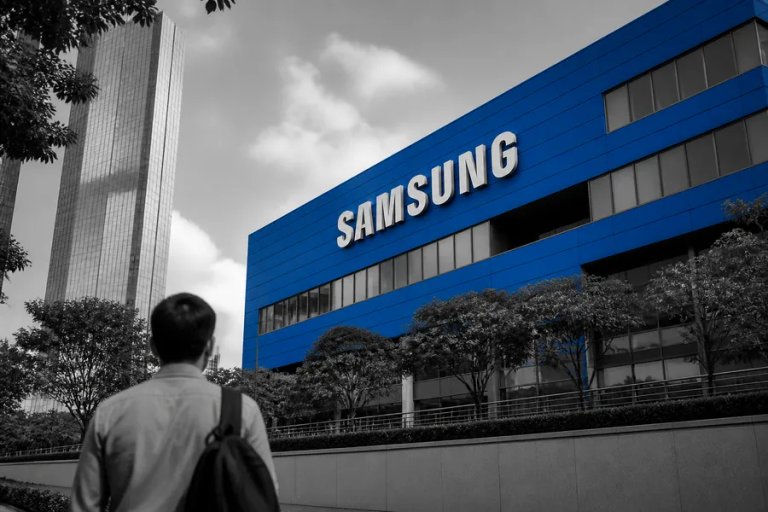
Samsung Electronics (005930.KS) is forecast to post a nearly nine-fold surge in third-quarter operating profit on AI-driven memory demand, even as analyst estimates have been trimmed by roughly 8% since late August.
The divergence between headline profit growth and softening margin expectations underscores a key risk investors must weigh before results land: robust top-line recovery does not necessarily translate into sustainable chip profitability 1.
Key Takeaways
- Q3 operating profit forecast nearly nine times higher year-on-year.
- Analyst consensus cut ~8% since end of August on margin concerns.
- Chip division margins expected to remain flat despite AI demand surge.
Market Reaction & Context
Samsung's anticipated profit recovery would be one of the most dramatic year-on-year rebounds among global semiconductor majors, yet the near-8% downward revision to consensus estimates since August signals that analysts are tempering their enthusiasm 1. By comparison, peers such as SK Hynix have benefited more cleanly from high-bandwidth memory (HBM) pricing tailwinds, giving Samsung's flat chip-margin outlook a notably cautious cast relative to the broader sector.
The semiconductor industry has been buoyed in 2026 by surging capital expenditure from hyperscalers building out AI infrastructure - a trend that has also lifted sentiment around AI-linked hardware suppliers as Anthropic's profitability milestone reshapes sector expectations. Samsung, however, faces the additional challenge of closing the gap with rivals on HBM supply qualification for leading AI chip designers.
Detailed Analysis
The near-ninefold profit jump is primarily a function of the unusually depressed base from the same quarter a year earlier, when an oversupplied memory market crushed margins industry-wide. A recovery of this magnitude is eye-catching, but the more telling metric for investors is whether Samsung's semiconductor division - the engine of its earnings - is widening margins as volumes recover.
Analysts who have revised estimates lower point to ongoing cost pressures in legacy DRAM and NAND production, as well as Samsung's lagging position in HBM3E chips relative to SK Hynix. Flat chip margins despite robust AI demand suggest pricing power remains constrained, and that volume gains are being partially offset by the cost of scaling advanced process nodes.
The roughly 8% consensus cut in roughly five weeks is a material move and implies that early optimism - built on headline AI spending data - has given way to a more granular assessment of Samsung's product mix and customer qualifications 1.
Outlook & Analyst Commentary
Analysts said the key variable for the fourth quarter will be whether Samsung secures broader HBM qualification from major AI accelerator customers, a step that would meaningfully shift its chip-margin trajectory. Without that catalyst, the gap between Samsung's headline profit recovery and its peer-relative margin performance is likely to persist.
"The profit recovery is real, but the quality of earnings matters - flat semiconductor margins in an AI supercycle raise legitimate questions about Samsung's competitive positioning in the highest-value memory segments," one analyst familiar with the estimates said, as reported by Reuters 1.
Conclusion
Samsung's Q3 results, when officially reported, will serve as a litmus test for whether the world's largest memory chipmaker is genuinely recapturing pricing power or simply riding a cyclical tide. Investors focused on deal terms and valuation should watch chip-division operating margin closely - not just the headline profit multiple - as the definitive indicator of Samsung's competitive standing in the AI memory race.
Not investment advice. For informational purposes only.